
Oban: a little town with a lot of history
Philosophers may never know what came first, the chicken or the egg, but Oban is a rare example where industry came before the town. From the first precious drops of whisky grew a whole ecosystem. From whisky - the water of life - a new culture, a new town and a new way of life did indeed flourish.
Built by brothers Hugh and John Stevenson in 1794, the distillery is perched on the shores of the Firth of Lorn and just over an acre in size. At the time, the surrounding area had little more than a natural harbour. The town was subsequently built around it, officially recognised as a burgh of barony in 1811.
Because the town was built around the distillery, it acts as its heart to this day, anchored to its 200-year plus history, and staying true to its foundations - both in terms of the building’s foundations, and how the whisky is made.
Oban whisky is inextricably bound to its environment. Oban’s water supply flows in from a loch three miles away. The barley travels 160 miles in from Speyside. All of the peat used to make Oban is harvested in Scotland.


A timeline of Oban
What you'll notice from this timeline is, over 200 years, there's only perhaps a handful of notable changes to the whisky and distillery, as the town prospered and developed around its quiet, steady progress. distillery, as the town prospered and developed around its quiet, steady progress.
1793: Brothers Hugh and John Stevenson established the Oban Brewing Company, and their first production was their Cowbell Ale
1794: The brothers started distilling whisky
1814: Sir Walter Scott visits, boosting tourism with his poem The Lord of the Isles
1830-1866: sources tend to disagree on the exact dates, but at some point between these years, the distillery was sold to Peter Cumstie
1862: The Duke of Argyll helped establish the first schooling in the area
1863: St John's Cathedral was built as a chapel, making it the first established churches in Oban
1871: The first Argyllshire Gathering takes place, establishing Oban's own Highland Games
1880: a railway was built in Oban which allowed the whisky to be sent to market and brought tourism to the town
1883: the distillery was sold on again to J. Walter Higgin who declared it 'The Finest Sma' Whisky in the Highlands'
1890: a fire breaks out - while the distillery isn't wrecked, the damage greatly halts productions
1897: Construction on McCaig's Tower takes place - to this day, the Colosseum-looking structure is a must for any visitor to the area
1972: A new stillhouse was built
1989: Oban whisky is selected as part of Scotland's Classic Malts selection
How to see Oban’s past still at work today
In a society that’s constantly pushing for more - more changes, more output, more for the sake of more - Oban has been a beacon of continuity and legacy for two centuries. It’s intentional. And it’s impactful.


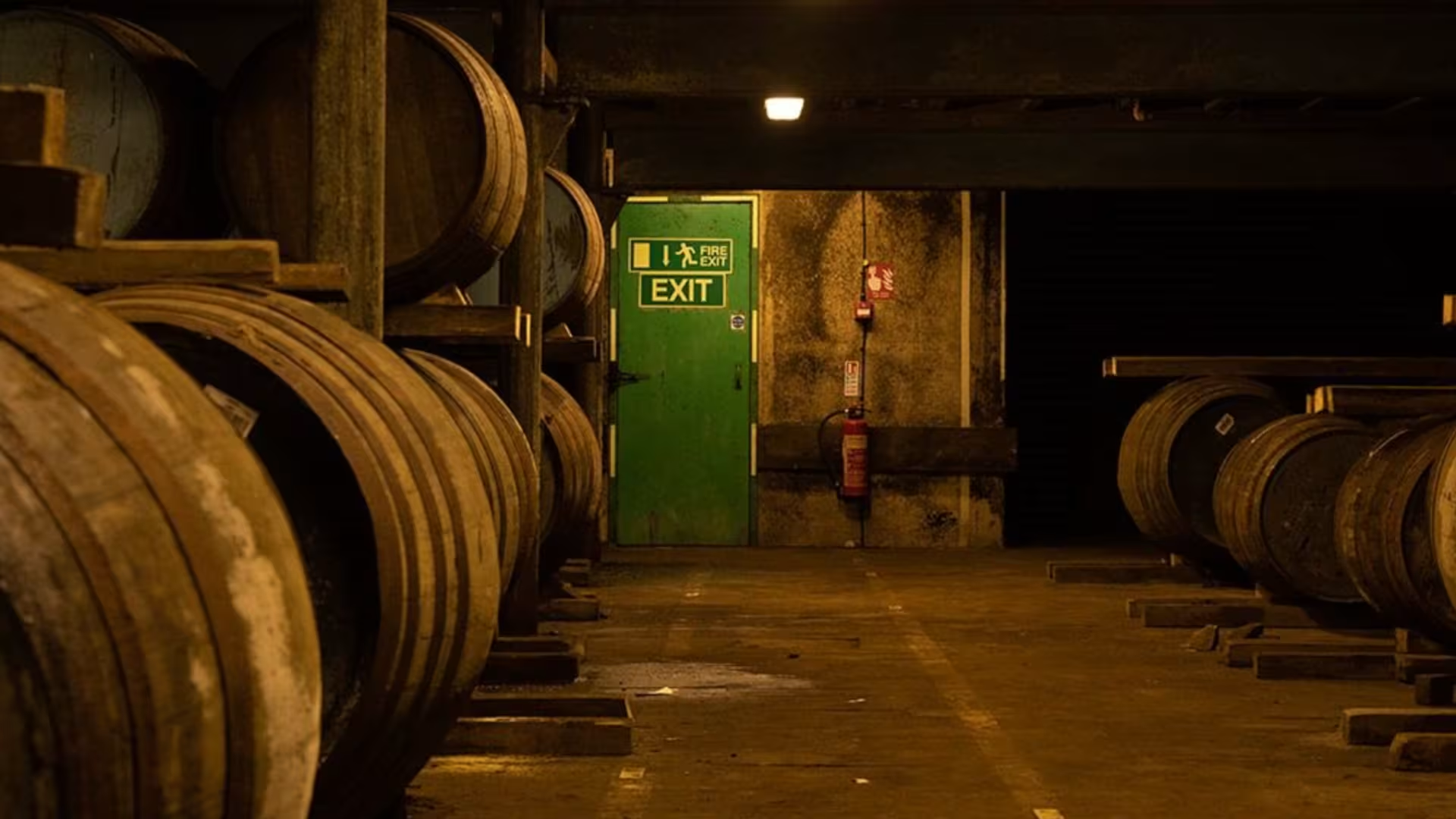

There are still only four rooms used to make whisky in the Oban distillery
No more, no less.
These are the mill room, where malted barley is ground in a mill to produce grist, the mash house, where this grist is mixed with hot water to extract the sugars, the tun room, where the wort is fermented, and the still house, where just two copper pots are used to distil the liquid. The oldest piece of machinery in the Oban distillery is the mill. It was manufactured by Boby Mill in the 1930s.
Oban uses one of the few traditional mash tuns left in Scotland. And while most new distilleries have switched to condensers, Oban still uses a worm tub - the vapour rises through the still and is condensed back into liquid in the worm tub condenser.
Oban’s mash tun does only 6 mashes per week: it could do more, but following a traditional process limits the supply of whisky Oban can produce in a week (again, in a world where ‘more’ is often demanded, Oban chooses quality over quantity).
It takes 50 hours in the four wooden wash backs to generate all the alcohol needed to make whisky, yet Oban leaves the wort in the wash back for 110 hours to create the traditional flavours.


Seven employees, 14 hands, one iconic whisky
The MacLean family has had three generations of men working at the Oban Distillery, and to this day, it still is a very hands-on affair creating Oban’s distinguished and distinctly Highlands liquid.
Just seven employees are involved in the making of the whisky - which is approximated at around 670,000 litres per year.

Of course, some things have changed
While the whisky making remains staunchly rooted in legacy, Oban today also acts as a visitor centre and cultural highlight, employing dozens more staff to lead immersive tours and create the ultimate whisky experience in the town that acts as the Gateway to the Isles - a town rooted in the Highlands but on the precipice of Scotland’s rugged islands.

Explore the world of Malts

A Day in the Life at Oban Distillery
With exclusive access to the people who make the Oban distillery what it is, whet your whistle with a teasing taste of what life in the Gateway to the Isles is like.
Learn more
How to Spend the Perfect Day in Oban by Lewis Nunn
Lewis, a Travel Editor specialising in luxury travel, crafts the ultimate itinerary for a day in Oban, perfectly situated in the West Highlands.
Learn More
Discovering the Lagavulin Distillery - Secrets, Surprises and More
Unlock the history, heritage and heart of the brand and discover how Lagavulin has brought a taste of island life to pop culture lovers, tastemakers and whisky lovers around the world.
Learn More